
The 2026 Reality: The Year of the Supervisory Audit
As we move through 2026, the focus has shifted from implementation to supervision and enforcement. Across the continent, enforcement and supervisory audits are intensifying. Regulators are no longer asking for “plans” or “intentions.”
In this landscape, the era of “Paper Compliance“—security policies that exist only in binders—has effectively ended. Global regulators and enterprise partners now look past documentation to measure your Compliance Velocity: the tangible speed at which your organization can execute security policies and prove resilience in real-time.
The Regulatory Squeeze: NIS2 and the Real Power of DORA
The financial and operational stakes of non-compliance have reached a critical threshold. It is vital to understand the distinct pressures these frameworks apply:
- NIS2 (Network and Information Security Directive): For essential and important entities, the risk is a penalty cap of up to 2% of total global annual turnover.
- DORA (Digital Operational Resilience Act): DORA grants financial supervisors the power to impose significant corrective and enforcement actions when operational resilience is lacking. This includes measures that can directly impact management continuity and impose strict operational mandates.
Whether it is a turnover-based fine or a supervisory intervention that disrupts management, the cost of “technical slowness” is a primary business risk.
The Supply Chain Mandate: Managing Unacceptable Risk
A common misconception is that these regulations only affect EU-headquartered firms. In reality, the Supply Chain acts as the primary enforcement bridge.
Under the new mandates, EU-based organizations are legally required to ensure their suppliers do not expose them to unacceptable cyber risk. In practice, this forces enterprise leaders to replace non-compliant vendors with those who can prove superior resilience. In 2026, your Compliance Velocity is your primary credential for global trade.
Defining ‘Compliance Velocity’: The Foundation of Operational Sovereignty
To navigate this environment, organizations must adopt a new KPI: Compliance Velocity.
Compliance Velocity is the measurable speed at which your organization identifies a threat, executes a defensive policy, and restores operations to remain in a compliant state.
High Compliance Velocity achieves Operational Sovereignty—the ability for a business to maintain total control and regulatory integrity over its digital environment, regardless of the external threat landscape.
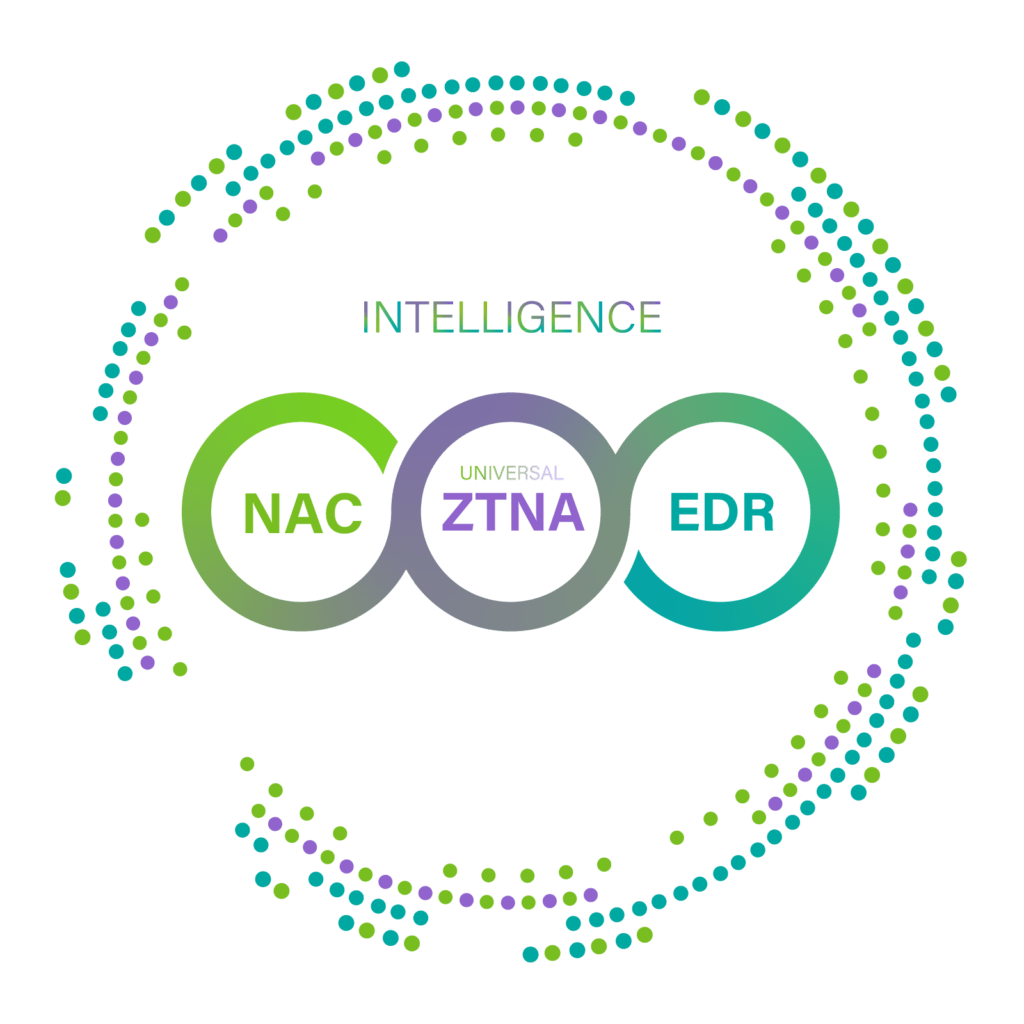
The Gatekeepers: NAC & ZTNA as the ‘Execution Layer’
Audit success now hinges on proving automated control. This is where the network layer serves as the “Execution Layer” for your Compliance Velocity:
- Genian NAC (Visibility & Isolation): Supports technical compliance by providing a real-time, automated inventory of every IT, OT, and IoT device. It enables the immediate, physical isolation of non-compliant devices.
- Genian ZTNA (Identity-Based Trust): Aligns with NIS2 and DORA’s access control mandates by enforcing ‘Least Privilege.’ It ensures that access is granted only to specific applications based on real-time health checks of the device and identity.
The Survival Engine: Genian Insights E (Unified Endpoint Platform)
DORA demands Operational Resilience—the technical ability to withstand and recover. Genian Insights E delivers this through endpoint execution powered by EDR, integrated into a single, lightweight agent that consolidates critical defenses:
1. Consolidate to Accelerate (AV + EDR)
By merging signature-based remediation with behavior-based hunting (XBA), it reduces ‘agent fatigue’ while providing the comprehensive visibility required by modern auditors.
2. Supporting Resilience (Anti-Ransom)
Aligning with DORA’s recovery framework, Genian Insights E provides real-time file backup and automated restoration. This provides the technical evidence that your business can survive and recover from a ransomware event, supporting business continuity mandates.
3. Closing the Physical Gap (Device Control)
It enables the protection of sensitive data by managing unauthorized USB and external drives—addressing critical ‘Insider Threat’ and supply chain risk requirements.
Traditional Audit vs. The Compliance Velocity Audit
| Audit Focus | Traditional “Paper” Approach | Compliance Velocity Approach (Genians) |
|---|---|---|
| Asset Control | “Show me your asset list.” | NAC provides a real-time, automated audit trail. |
| Access Policy | “Who has access to the VPN?” | ZTNA proves app-level access based on real-time risk. |
| Resilience | “What is your recovery plan?” | EDR demonstrates automated file restoration logs. |
Conclusion: A Strategic Edge for the Ready
For the unprepared, the NIS2 and DORA onslaught is a revenue catastrophe. But for those who embrace Compliance Velocity, it is a strategic advantage.
By building an Execution Layer that supports and enables these rigorous standards, you aren’t just avoiding sanctions—you are establishing Operational Sovereignty and proving your resilience to the global market.
Is your Compliance Velocity fast enough to protect your global revenue? The clock is ticking.
Appendix: Technical Alignment for Regulatory Compliance
To assist Legal and Compliance teams in their evaluation, the following table maps Genians’ technical capabilities to specific requirements within the NIS2 and DORA frameworks.
| Regulation & Article | What the Law Requires | Genians Control | What It Technically Enforces | Audit Evidence Produced |
|---|---|---|---|---|
| NIS2 Art. 21(2a) Risk Management | Organizations must manage cyber risk across all ICT assets | Genian NAC | Real-time inventory of every IT, OT, IoT device | Device inventory, connection history |
| NIS2 Art. 21(2b) Access Control | Only authorized users and devices may access systems | Genian ZTNA | Identity + device-health based application access | App-level access logs |
| NIS2 Art. 21(2c) Asset Management | Assets must be known and controlled | Genian NAC | Detects unmanaged or rogue devices | Unknown-device detection records |
| NIS2 Art. 21(2d) Incident Handling | Incidents must be detected, contained, and mitigated | Insights E + NAC | Detects endpoint threats and isolates infected systems | Detection alerts, quarantine logs |
| NIS2 Art. 21(2e) Business Continuity | Services must survive cyber disruption | Insights E Anti-Ransom | Auto-backup and restore of files after attack | Restore logs, recovery timestamps |
| NIS2 Art. 21(2f) Supply Chain Security | Suppliers must not introduce unacceptable risk | NAC + ZTNA (Vendor Devices) | Identifies and restricts all partner and contractor devices | Vendor device compliance records |
| NIS2 Art. 23 Accountability | Controls must be demonstrable | Unified Genians Logs | Correlated asset, access, and response evidence | Cross-layer audit trail |
| DORA Art. 12(1) ICT Risk Controls | Firms must apply technical ICT risk controls | NAC + ZTNA + EDR | Enforces device, identity, and endpoint security | System control logs |
| DORA Art. 12(2) Resilience & Recovery | Systems must withstand and recover from incidents | Insights E Anti-Ransom | Live backup + automated file restoration | Recovery reports |
| DORA Art. 12(2) Containment | Attacks must be technically contained | NAC + ZTNA | Lateral movement blocked, devices isolated | Isolation records |
| DORA Art. 12(3) Data Protection | Data integrity and confidentiality must be preserved | Device Control + Backup | Blocks USB exfiltration, restores corrupted files | USB block logs, backup snapshots |
| DORA Art. 12(4) Third-Party ICT Risk | ICT suppliers must be controlled | NAC + ZTNA | All vendor access identified and restricted | Partner access logs |
| DORA Art. 12(5) Detection & Response | Firms must detect and respond to ICT incidents | Insights E (EDR) | Endpoint threat detection and response | Incident response logs |
| DORA Art. 12(6) Evidence of Recovery | Firms must prove recovery capability | Insights E Restore Logs | Shows successful restoration after attack | Recovery timestamps, file hashes |
| DORA Art. 12(7) Auditability | Controls must be provable to supervisors | Genians Audit Trail | Correlated NAC, ZTNA, EDR logs | Supervisory-grade evidence |