
Your ZTNA is Blind Without NAC: Bridging the Intelligence Gap
ZTNA is often introduced as a clean replacement for VPN. Identity-based access. Per-session trust. No exposed networks. All correct. Still incomplete.
In production environments, ZTNA rarely fails at access decisions. It struggles with operations: onboarding users, handling edge cases, automating responses, explaining outcomes, and preventing policies from collapsing under real-world complexity.
To understand how a ZTNA product truly evolves, release notes matter more than architecture diagrams.
What the Genian ZTNA Release Notes Emphasize
Across Genian ZTNA 6.0 revisions in 2024–2025, a consistent theme appears. ZTNA is treated not as a static gateway, but as a system that must operate continuously under change.
Several updates make this explicit:
Revision 6.0.32
- Component: Security / Administration
- Description: Mitigation for CSV Injection risks in administrative workflows.
- This acknowledges a hard truth: ZTNA control planes are operational attack surfaces.
Revisions 6.0.33–6.0.34
- Components: Agent / OS Compatibility
- Description: Support for newer Windows Server and macOS environments, improved agent behavior.
- These updates prevent ZTNA from becoming the blocker in modernization projects.
Revision 6.0.37
- Component: Agent / Integration
- Description: Linux Agent interoperability with SSL VPN environments.
- This reflects reality: ZTNA is introduced alongside existing infrastructure, not after a clean reset.
Revision 6.0.38
- Component: Workflow Automation
- Description: Introduction of Loop, If/Else logic, SendMail actions, and cryptographic functions (AES, Hash, HMAC).
- This marks a structural shift. ZTNA evolves from access enforcement into automated operational control.
Individually, these changes appear tactical. Collectively, they redefine what ZTNA is expected to do.
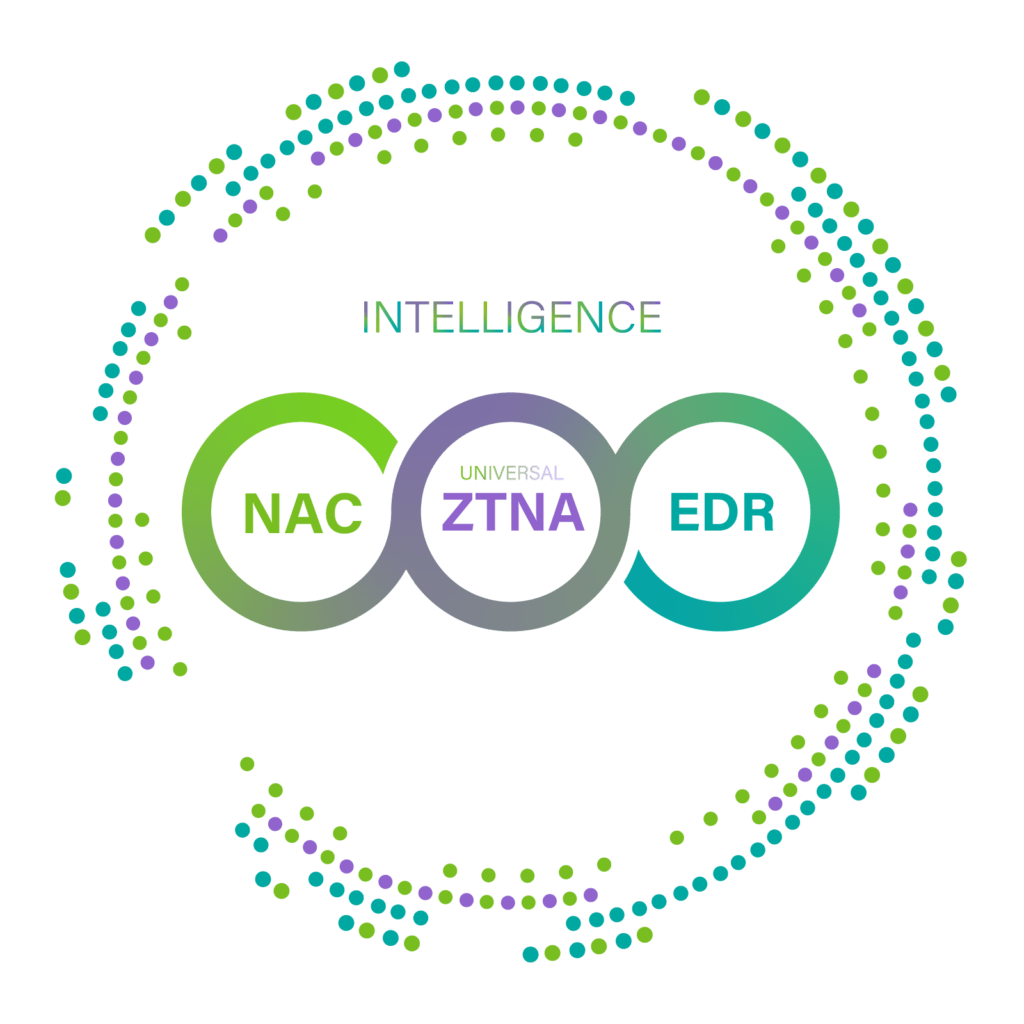
ZTNA Built on NAC Changes the Equation
One architectural detail matters: Genian ZTNA is built on Genian NAC. This means ZTNA does not start from a blank access decision. It inherits device context, policy state, and—most importantly—exception intelligence already handled at the network layer.
In the Genian NAC analysis, NAC was described as an exception engine: a system designed to absorb unavoidable exceptions, constrain their scope, and preserve evidence.
Genian ZTNA extends that foundation.
Exceptions identified and structured by NAC are not discarded. They become inputs for ZTNA workflows—automated approvals, conditional access, notifications, and remediation logic. What NAC absorbs, ZTNA operationalizes.
This enables Genian to do both:
- Handle exceptions realistically at the network level
- Operate Zero Trust continuously through automation
ZTNA without NAC often manages access. ZTNA built on NAC manages execution over time.
How This Differs from Common ZTNA Positioning
Most ZTNA platforms emphasize:
- Identity-based access
- Session isolation
- Micro-segmentation
Genian ZTNA does not reject these ideas. It extends them into operations. The release history shows consistent investment in:
- Workflow-driven automation instead of manual approvals
- Control-plane security, not just data-plane access
- Agent and OS resilience to avoid operational dead ends
- Integration paths that accept coexistence, not clean-slate assumptions
This reflects a different philosophy: ZTNA is not just about deciding who can connect. It is about managing what happens next, repeatedly and at scale.
Why This Matters to Customers and Partners
ZTNA deployments fail quietly when:
- Exceptions multiply
- Manual processes creep in
- Operations teams become bottlenecks
The Genian ZTNA 6.0 release trajectory reflects lessons learned from those failures. Features are shaped by friction reported from the field, not idealized diagrams. That makes the insight credible.
The Takeaway
Genian ZTNA does not treat Zero Trust as a one-time decision at login. It treats it as an ongoing operational problem—one that requires automation, explainability, and resilience. Built on Genian NAC, it combines two engines:
- An exception engine at the network layer
- An operations engine for Zero Trust execution
The release notes support a clear conclusion: Genian ZTNA is not just an access product. It is evolving into an operations engine for Zero Trust.