
The traditional narrative of public sector security worships “compliance.” In theory, more security layers mean more safety. In reality, these organizations are operationally hostile endpoint environments—collision zones where multiple security and compliance systems compete to modify the same OS state, often with systemic operational results.
Based on the operational reality of a major Korean government agency, this case study analyzes how Genian NAC and EDR resolve the systemic conflicts inherent in complex infrastructures.
Agent Cannibalization: When Compliant Software Attacks Itself
Recovery logic becomes the primary attack surface. In dense security stacks, “agent cannibalization” occurs when one security tool misidentifies another as a threat. Both systems were correct. The environment was broken.
- The Conflict: A fully compliant Data Loss Prevention (DLP) system was systematically deleting NAC agent integrity files, triggering an endless self-healing loop of re-installations and window pop-ups.
- The Analysis: This wasn’t a “bug”—it was a conflict between two valid security policies. By deleting the files required for integrity verification, the DLP forced the NAC agent into a permanent state of failure.
- The Solution (Runtime Isolation Boundary): Rather than treating this as a software error, Genians established a Runtime Isolation Boundary. By implementing a “Deletion Exclusion Policy” as an Execution Boundary between competing controls, the system secured the NAC agent’s survival without compromising the DLP’s mission.
Authority Conflicts: Reconciling the “Source of Truth”
Security friction often stems from a conflict between different authorities. When Microsoft, an internal WSUS, and a NAC remediation engine all claim to have the “Truth” about a patch state, the user is caught in the crossfire.
- The Conflict: Users were blocked from the network even after completing updates. This was not a missing patch problem; it was a conflict between three authoritative patch states.
- Architectural Failure Mode — Three systems asserted truth. None could see the shared operational whole.
- The Analysis: The NAC’s default logic looked to Microsoft’s official servers, while the internal infrastructure was dictated by a local WSUS. This created an operational false positive—a vulnerability that existed only in the data mismatch, not in the actual OS state.
- The Solution (Data Plane Priority): Genians redefined the data plane priority. The agent was re-engineered to prioritize the internal WSUS information stored in the local registry, synchronizing the security policy with the actual operational infrastructure.
Identity Integrity: Resolving Object Collisions in AD
Automating user and department data via Active Directory (AD) is a prerequisite for Zero Trust, but data errors during sync create high-risk security blind spots. Misidentifying a machine as a person—or vice versa—collapses the entire trust model.
- The Conflict: Identity data would intermittently “ghost” (showing zero members) or generate abnormal, encrypted-like strings for user IDs.
- The Analysis: This was a high-risk Identity Collision. The system failed to distinguish between User objects and Computer objects during LDAP polling.
- The Solution (Granular Sync Query): To ensure identity integrity, Genians applied a Granular Sync Query using PrimaryGroupID filters to explicitly separate User groups (513) from Computer groups (515). This is an operational differentiator. It allows for a reliable Identity Engine, filtering out non-person IDs (e.g., FTC, U) via regex-based logic.
Operability-Driven Enforcement: Compliance as a Managed Outcome
Public sector mandates often demand theoretical perfection. However, security that cannot be operated in the field is a liability.
- The Strategy: The organization enforced a score-based block, denying network access to any node scoring below 95 points.
- The Technical Philosophy: Compliance metrics were engineered to reflect what could actually be fixed, not what could be theoretically demanded. By refining the query logic for template visibility and scoring, Genians ensured that “uncheckable” items did not unfairly penalize users. This creates a balanced enforcement environment where security remains a tool for hardening, not a cause for paralysis.
The Move from SI “Shelfware” to Operable Assets
As Genians’ clients expand into EDR, they are rejecting the bloated System Integration (SI) model, where security exists only in PowerPoint, tickets, escalations, and change requests.
- The Shift: Organizations are opting for proven, off-the-shelf (COTS) products. Security that cannot be operated by internal teams becomes shelfware.
- Operational Integration: The priority is “Agent Consolidation”—merging EDR capabilities into the existing NAC footprint. This reduces the “agent tax” while providing practitioners with surgical response tools (file collection, forced deletion, live containment) required to manage real-time threats.
Conclusion: Security is an Operational Engine, Not a Policy Boundary
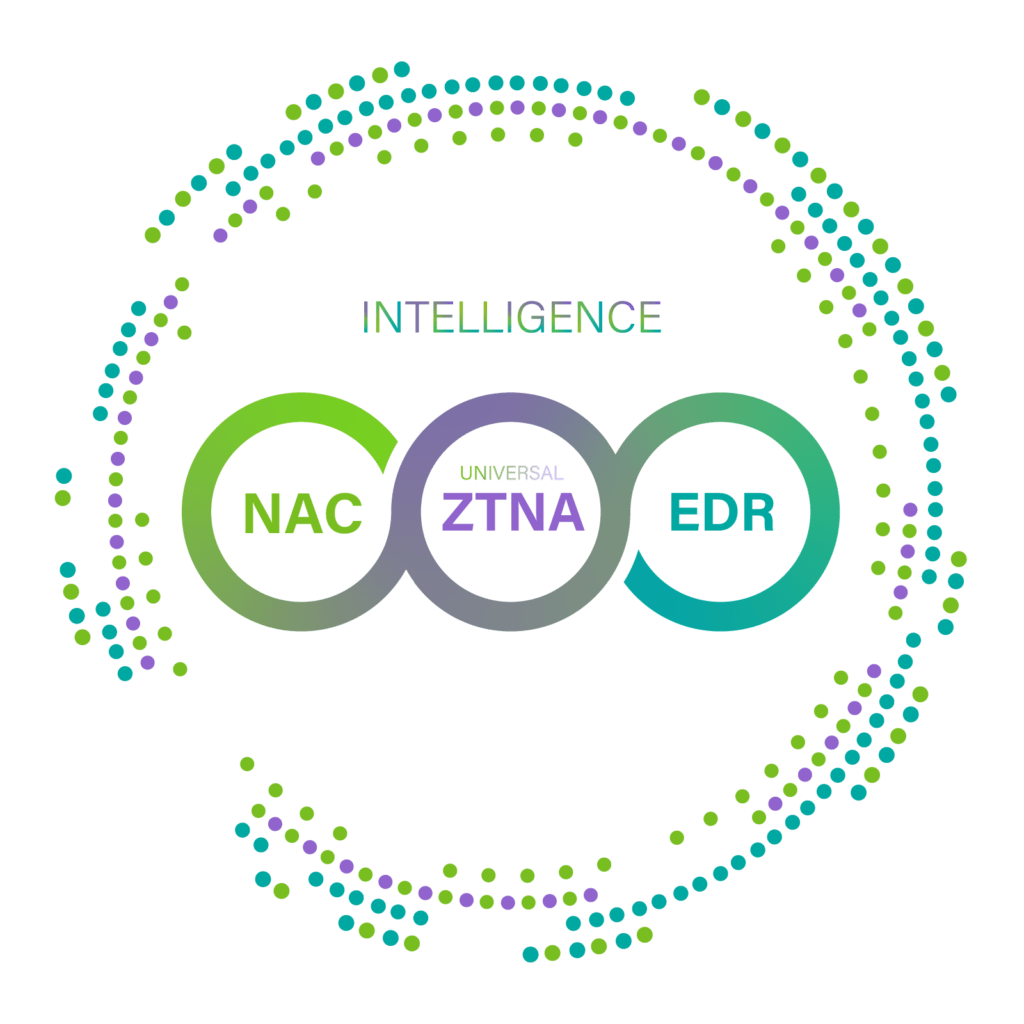
Operational reality in major institutions proves that effective security is defined by how well a tool absorbs field complexity. By resolving agent cannibalization, reconciling authority conflicts, and ensuring identity precision, the Genians suite (NAC, EDR, ZTNA) proves it is more than a mere “Policy Boundary.” It is a robust Operational Engine that maintains organizational integrity within the world’s most operationally hostile governed endpoint estates.